When AI Meets HR: Predictive Models for Engineer Retention
The 2026 Retention Crisis: AI Spots Engineering Flight Risks
In 2026, many organizations find themselves in an odd spot. Almost everyone in engineering uses AI now; industry research suggests most engineering teams. And yet? We're still stuck. There's this apparent "Productivity Plateau." But here's the kicker: standard HR predictive tools just aren't cutting it. They're built on generalized workforce data, so they consistently miss the real picture, especially for software engineering teams. They often miss all the small stuff specific to developer workflows. And that means organizations can't really see when someone's unhappy. So they can't stop critical talent from walking out the door.
So, yeah, that's a paradox, right? AI should make things more efficient. But it also brings in subtle new stressors. And traditional HR systems? They just can't see them. That's what we call the "AI-Engineering Moat." Look, this isn't just about analytics. It's about building a retention strategy that's actually rooted in a deep, technical understanding of the engineering world. We need to move past generic HR metrics. We need to figure out what really drives developers to stay engaged, or to leave.
Q: Why is the standard 'Flight Risk' score failing in 2026?
So, why aren't those old "flight risk" scores working anymore? Simple: the time between an engineer getting disengaged and actually quitting has shrunk. A lot. That makes those old, reactive models pretty useless, frankly. It means HR's usual tools give you insights too late. You can't actually do anything about it.
Today, things like a good salary or generous perks? Those are just table stakes. "Hygiene factors," as some call them. They're necessary, sure. But they won't keep someone loyal long-term in this wild tech market. The real challenge is spotting those tiny, subtle shifts in an engineer's daily grind. That's why we're seeing a huge move away from relying on those big, subjective annual or quarterly sentiment surveys. Honestly, these projects often fail more than 85% of the time. They just capture outdated insights. They're way too slow for today's fast-changing workforce. And research shows employees usually mentally check out six months before they actually resign https://cloverera.com/research-insights/. So, those static annual surveys? They completely miss that critical window. You can't anticipate or prevent tech talent turnover with them, says Cloverera insights. Instead, our focus is on objective "Digital Exhaust" data. Think of it as the passive, continuous stream of info an engineer generates just by doing their daily work. That's things like Slack activity, Jira ticket flow, and GitHub commit histories. This "digital exhaust" gives you a much more accurate, real-time look at developer sentiment, workload, and where they might be getting frustrated. Way better than any old survey. It's an always-on feedback loop. So you can spot disengagement signals proactively, long before someone even thinks about writing that resignation letter.
Q: You talk about 'Self-Admitted Technical Debt' (SATD). How does a model track that?
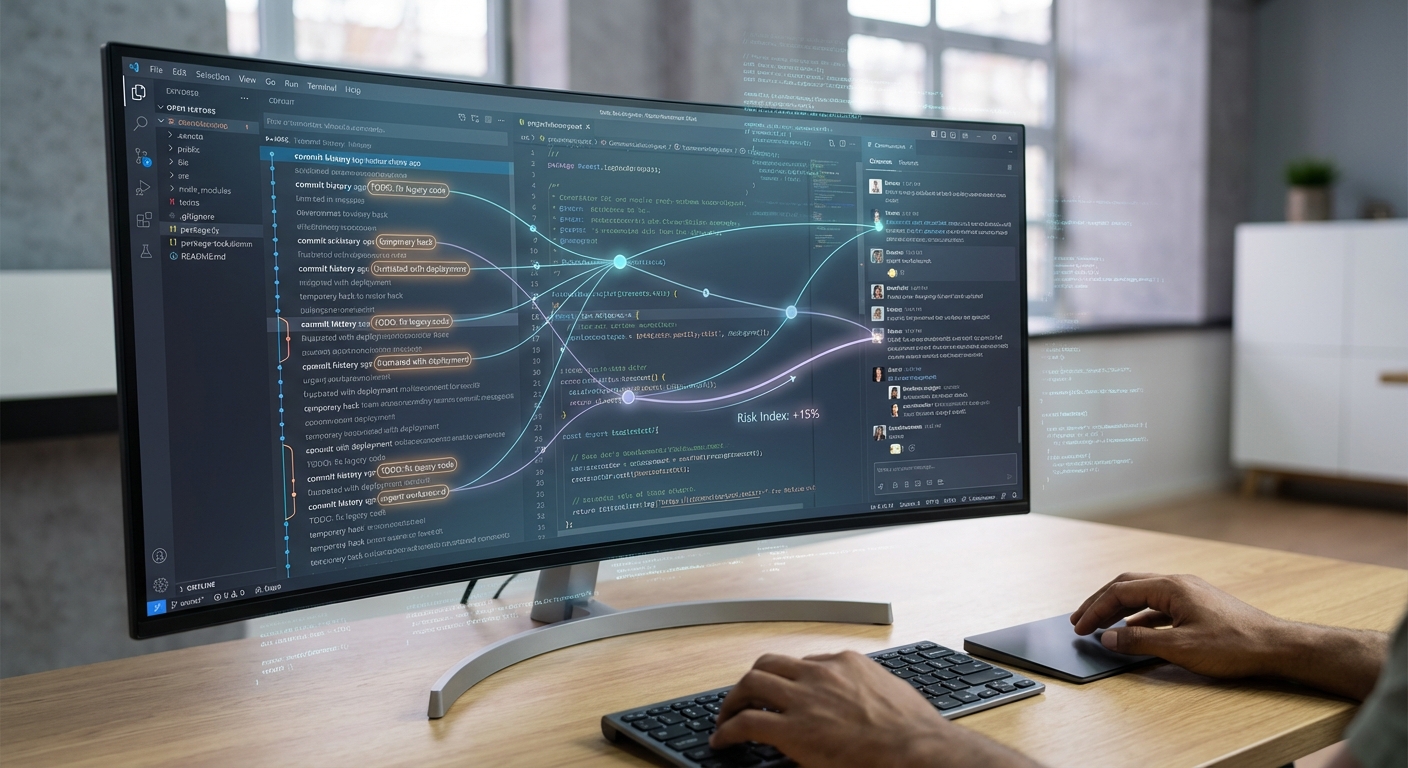
So, "Self-Admitted Technical Debt" (SATD). What is it? Basically, it's when an engineer admits to a code shortcut or a less-than-ideal solution. Our predictive models track this. We use Natural Language Processing (NLP) on things like code comments and commit messages. By digging into the language in these technical discussions, an AI model can spot "Developer Hesitation." It sees the underlying frustration, the workarounds.
When engineers leave comments like "TODO: fix this hack" or "I hate this legacy API," or even "Workaround for integration issues"? Those aren't just quick technical notes. No, they're early warning signs. They're buried SATD. At Suitable AI, our models directly link the amount and tone of these comments to higher team attrition rates. It's a clear pattern. The link between piling up SATD and developer burnout is huge. Engineers get totally demoralized working in systems full of known problems. That leads to disengagement. And then they leave. It isn't just about code quality, either. It's about the cognitive load, the sheer psychological toll it takes on the whole team.
"Enterprise AI coding tool investments often fail in many deployments because organizations measure typing speed instead of system-level improvements... Technical debt doesn't just slow systems—it destroys people."
Honestly, this constant battle against a broken system just grinds down morale. It slows everything. Eventually, talented engineers look for places where they can actually build instead of constantly fighting.
Q: What is the 'AI Janitor' effect and how does it drive away Senior Talent?
Okay, so what's this "AI Janitor" effect? It's when your senior engineers, your top talent, end up spending way too much time just reviewing, debugging, and fixing AI-generated code. They're not doing high-impact original development. This leads straight to burnout and people quitting. And a big part of this is the growing bottleneck in pull request (PR) reviews. AI pumps out tons of code. Great. But that code often needs a ton of human oversight and refinement to actually hit production standards.
We quantify this with something we call the "Reviewer-to-Author" friction ratio. This metric spots when senior engineers are essentially acting as "AI Janitors." They're just cleaning up AI output, not pushing major features or building core architecture. That's a problem. Our predictive models can tell when "Cognitive Overload" from all that AI code review hits a breaking point. Here's an example: if an engineer's PR review volume skyrockets, but their own code contributions don't go up? That's a massive red flag for burnout. This effect is exacerbated by the fact that approximately 27% (specifically 26.9%) of production code is now AI-authored, according to a February 2026 analysis by DX based on data from 4.2 million developers, a claim also supported by dev.to.
Here’s how a senior engineer's workload can shift:
| Workload Aspect | Pre-AI Code Generation | Post-AI Code Generation |
|---|---|---|
| Primary Focus | Architecting, original feature development | Extensive code review, debugging AI output, refinement |
| PR Contribution | High ratio of authored PRs to reviewed PRs | High ratio of reviewed PRs to authored PRs |
| Cognitive Effort | Problem-solving, creative solution design | Identifying subtle AI errors, ensuring quality standards |
| Skill Utilization | High-level design, mentorship, complex problem solving | Policing code quality, refactoring, AI output integration |
| Sense of Impact | Direct contribution to product features | Maintaining code health, mitigating AI-introduced risks |
This kind of shift? It leaves senior engineers feeling completely underutilized and frustrated. They just leave. Who wants their expertise squandered on remedial tasks?
Q: How can CTOs use 'Technical Lag' to build a retention moat?
CTOs, listen up: you can use "Technical Lag" to keep your talent. It's about recognizing that huge gap between your company's tech stack and what's standard in the industry. That gap directly hits engineer satisfaction and their career growth. What is Technical Lag? It's outdated dependencies, legacy frameworks, not using modern tools or practices.
High-performing engineers, especially, know that working with "Old Tech" is a career killer. It creates a "Skills Panic." They worry their skills will become irrelevant in this super-fast AI world. That leads to a higher "Mastery-to-Churn Ratio." Basically, if engineers aren't learning new, cutting-edge skills, they're more likely to look for opportunities somewhere else. So, to fix this, CTOs should build a "Modernity Index" right into their predictive retention dashboard. Seriously. This index measures how current a team's tech stack really is. It flags teams stuck with obsolete tech. A low Modernity Index? That doesn't just mean technical debt. It also screams high risk for developer unhappiness. (Side note: We often see enterprise teams struggle with this exact scenario, thinking "if it ain't broke," but it is broken when your best engineers leave.) This directly impacts "Developer Experience" (DevEx). That's every single interaction a developer has with their tools and environment. And outdated technology? It absolutely kills DevEx. It increases friction, slows development to a crawl. It makes daily work a frustrating uphill battle. And that's a huge reason why people get disengaged and eventually leave.
Q: Step-by-Step: How to build an Engineering-First Predictive Model
Building a really effective, engineering-first predictive retention model? You need a layered approach. It starts with raw engineering data. Then you gradually add in behavioral and sentiment insights. This isn't your old HR model. This one goes way beyond traditional metrics by deeply integrating with the entire engineering ecosystem.
Phase 1: Ingesting Core Engineering Metrics
This first, foundational phase is all about grabbing the direct outputs of engineering activity. It helps us set a baseline for how productive and engaged a team really is.
- PR Latency: Track the time from pull request creation to merge. High latency can indicate bottlenecks, overloaded reviewers, or complex code.
- Commit Velocity: Monitor the frequency and volume of code commits per engineer. Consistent, healthy velocity suggests active contribution.
- Code Churn: Measure how often specific code sections are rewritten or discarded. High churn in critical areas might signal design flaws or frustration.
- Deployment Frequency: Observe how often teams push changes to production. Higher frequency often correlates with healthy, agile processes.
- Incident Frequency & Resolution Time: Track operational overhead, as constant firefighting can be a major stressor.
Phase 2: Layering in 'Social Interaction Metadata'
Once we have that core engineering data, the next step is to add context. We explore how engineers talk to each other within their teams. This gives us crucial insights into collaboration and overall team health.
- Slack Responsiveness Patterns: Analyze response times and participation in technical channels to gauge active engagement and support.
- 1:1 Meeting Frequency: Monitor the regularity of manager-engineer check-ins. A drop can indicate disengagement or lack of support.
- Code Review Engagement: Track the quantity and quality of code review comments, both given and received, as an indicator of collaborative health.
- Cross-Team Collaboration: Identify patterns of interaction with other teams, which can highlight silos or effective knowledge sharing.
- Documentation Contribution: Assess participation in maintaining internal wikis or knowledge bases, reflecting ownership and shared responsibility.
Phase 3: The 'Aha!' Variable – Sentiment Analysis of Technical Discussions
Alright, this is where the real predictive power kicks in. We dig into the qualitative side of technical communication. That's how we uncover the underlying sentiment, the frustrations, even the excitement.
- Sentiment Analysis of Code Comments: Apply NLP to identify positive, neutral, or negative sentiment in comments (e.g., "This is brilliant!", "TODO: awful hack").
- PR Description & Review Sentiment: Analyze the language used in pull request descriptions and review comments for tone and underlying feelings.
- Internal Communication Channels (e.g., Slack, Jira) Sentiment: Monitor technical discussions for signs of frustration, burnout, or positive problem-solving.
- Topic Modeling: Identify recurring problematic topics or areas of persistent technical debt that generate negative sentiment.
- Pattern Recognition in 'Workarounds': Detect increasing mentions of workarounds or "temporary" solutions as a proxy for growing technical debt.
Closing: The Future of the Human-AI Engineering Partnership
Here's the deal: talent retention in engineering is changing. We're moving from just "Predictive" to truly "Prescriptive." It's not enough to guess who might leave anymore. We have to use these deep, engineering-specific insights to actually fix problems. To reshape the environment before anyone even thinks about walking out.
For Founders and CTOs, listen: employee retention isn't just some HR policy you enforce. No. It's a continuous debugging process of your entire engineering environment. You've got to treat your engineering culture, your tools, your processes, with the same rigor you'd apply to your codebase. When you really focus on the developer experience—everything from the quality of the code they write to whether their tools are actually relevant—you build this intrinsic "AI-Engineering Moat." It nurtures talent. It helps you resist all those outside pressures. The real power of AI in HR isn't just analyzing data, but empowering leaders to cultivate an engineering ecosystem where talent doesn't just survive, it thrives. Innovative ideas flourish. It's like tending a high-performance garden, not just counting the wilted leaves. That's how you keep your organization at the absolute forefront of tech.
References
FAQ
- Why are traditional 'flight risk' scores failing to predict engineer departures in 2026?
- Traditional flight risk scores fail because they are too reactive and based on outdated sentiment data, while the time between disengagement and resignation has shrunk significantly. Employees often mentally check out six months before resigning, making static annual surveys ineffective for anticipating tech talent turnover.
- How do AI models track 'Self-Admitted Technical Debt' (SATD) to predict engineer attrition?
- AI models use Natural Language Processing (NLP) on code comments and commit messages to detect 'developer hesitation' and underlying frustrations. Identifying phrases like 'TODO: fix this hack' or 'I hate this legacy API' signals buried SATD, which our models link directly to higher team attrition rates due to demoralization and burnout.
- What is the 'AI Janitor' effect and how does it contribute to senior engineer turnover?
- The 'AI Janitor' effect occurs when senior engineers spend excessive time debugging and refining AI-generated code, rather than on high-impact development, leading to burnout. Metrics like a rising 'Reviewer-to-Author' friction ratio indicate senior talent is being underutilized, as approximately 27% of production code is now AI-authored, shifting their workload to oversight.
- How can CTOs leverage 'Technical Lag' to build an engineering retention moat?
- CTOs can address 'Technical Lag'—the gap between a company's tech stack and industry standards—by building a 'Modernity Index' into retention dashboards. This index identifies teams stuck with obsolete tech, which directly impacts 'Developer Experience' (DevEx) and career growth concerns, leading engineers to seek environments where they can learn cutting-edge skills.
- What are the key phases for building an engineering-first predictive retention model?
- Building an effective model involves three phases: 1) Ingesting core engineering metrics like PR latency and commit velocity; 2) Layering in 'Social Interaction Metadata' from Slack responsiveness and code review engagement; and 3) Analyzing sentiment from technical discussions using NLP to uncover underlying frustrations and engagement levels, as Suitable AI's approach does.