Decoding the 'Perfect Fit': Beyond Technical Skills with Predictive AI
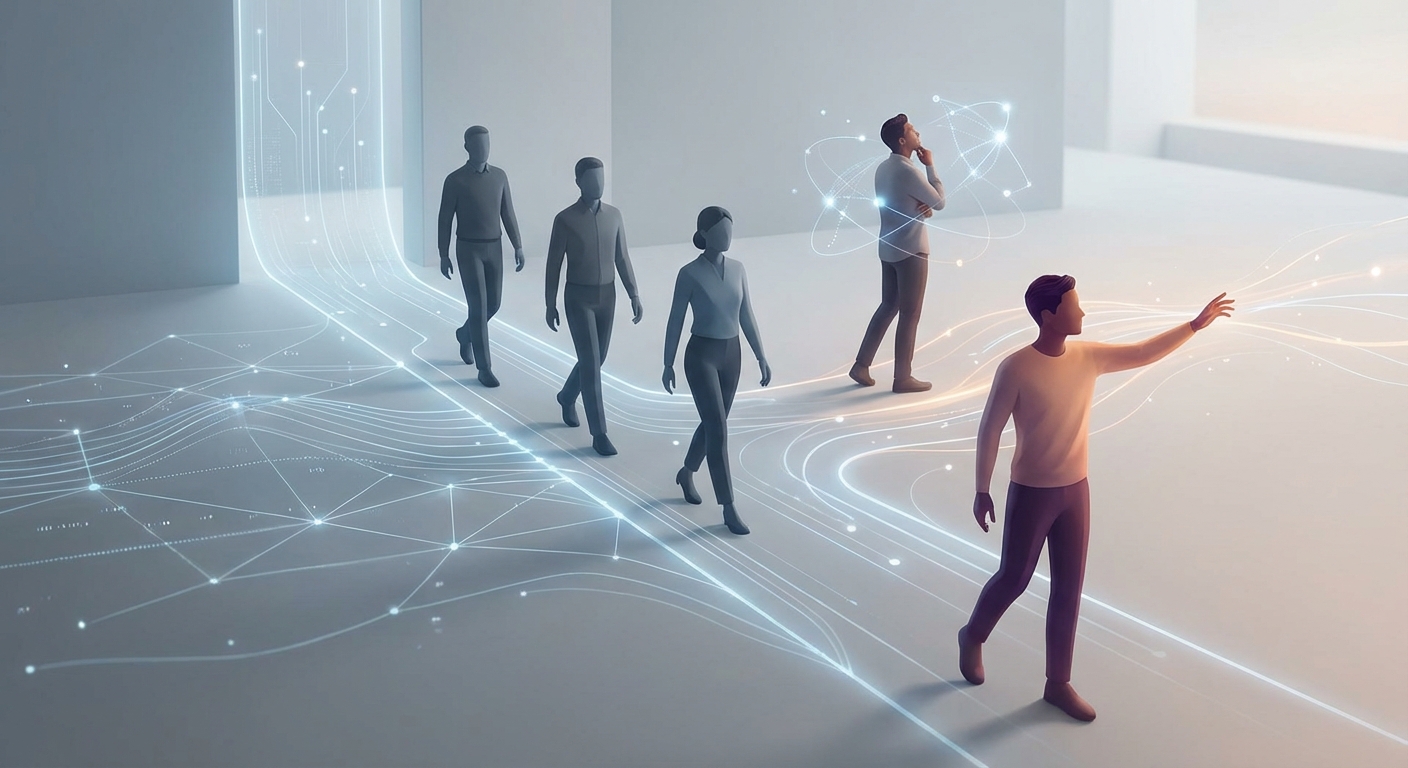
You've invested in AI for hiring, hoping to find the best talent faster. But what if your sophisticated algorithms are actually creating a paradox? What if, in their rush for efficiency and that optimized "fit," they're filtering out the very people who could propel your scale-up to its next big breakthrough? You could be left with competent but ultimately uninspired teams.
It’s time for a truly contrarian take on talent acquisition. The real power of AI isn't about replicating your existing successes. It's about strategically injecting the kind of diverse thinking that builds an unassailable competitive advantage: what we call your AI Moat.
The Efficiency Trap: Why Your AI is Hiring Boring Teams
Traditional AI in hiring often falls into a trap. When it optimizes for historical "top performers," it gets caught in algorithmic homogenization. This unintentionally just duplicates existing team patterns. It doesn't actually foster innovation through diverse perspectives. And that, frankly, leads to stagnation, not genuine progress.
The Danger of Training on Your 'Top 10%'
Look, when you train your AI models mainly on the traits of your current "top 10%" performers, you’re risking a self-reinforcing feedback loop. This approach seems smart, right? But it actually prioritizes conformity over true innovation. It teaches the AI to seek out candidates who mirror current strengths and problem-solving styles. This often means it overlooks, or actively filters out, individuals with different, but equally valuable, ways to tackle complex challenges. The result? A team that’s great at what it already does. But it’s also increasingly less capable of adapting, evolving, or disrupting its own status quo. We often see enterprise teams struggle with this exact scenario.
How 'Culture Fit' Became a Euphemism for Stagnation
The idea of "culture fit" has always been a bit of a mixed bag. When it’s misapplied in AI-driven hiring, it can become a real barrier to growth. Often, "culture fit" just boils down to asking if a candidate is "like us" or "will get along." And when AI is trained on that kind of subjective data, it can't help but learn and perpetuate existing biases. It favors candidates who reinforce the team’s current thought patterns and working styles. This directly leads to algorithmic homogenization. The AI systematically sifts out diverse perspectives. It stifles the very intellectual friction necessary for innovation. Your AI, while trying its best to find a "fit," actually becomes an engine for sameness. It's certainly not about driving new ideas.
The Hidden Cost of Algorithmic Homogenization
Building teams through algorithmic homogenization carries significant long-term costs. These aren’t always obvious right away. Homogenous teams might feel comfortable in the short term. But they’re inherently less resilient and less innovative. They’re way more susceptible to groupthink, struggling to come up with fresh solutions when unprecedented problems pop up. This lack of diverse perspectives can lead to missed market opportunities. It causes slower adaptation to tech shifts. And ultimately, it means a decline in competitive edge.
Our internal benchmarks show that companies with above-average diversity on their management teams reported innovation revenue 19 percentage points higher than those with less diverse leadership. That shows a direct link between diversity and financial success. More specifically, these diverse organizations generated 45% of their total revenue from innovation, compared to just 26% for less diverse teams. Pretty telling, isn't it?
The 18-Month Expiry: Technical Skills as a Trailing Indicator
Here's the reality: In today’s fast-evolving tech world, the most valuable thing a candidate brings isn't their current technical knowledge. It's their dynamic ability to adapt, unlearn, and relearn fast. The Skill Half-life of specific technical proficiencies has never been shorter.
Why Hiring for Python or React Mastery is a 2020 Strategy
Honestly, just focusing on a candidate’s mastery of specific technical skills, like Python or React, feels like a relic from a bygone era. The Skill Half-life (that’s the time after which a skill’s value or relevance drops significantly) is shrinking dramatically. What’s cutting-edge today? It can quickly become legacy tomorrow. This means a candidate hired for their optimized command of a specific framework might find their core expertise outdated in a short period. By prioritizing static credentials, you’re building a team optimized for yesterday’s problems. You’re not preparing them for tomorrow’s unknown challenges. That’s a missed opportunity, we think.
Defining 'Cognitive Elasticity': The Ability to Unlearn and Relearn at AI-Speed
The critical new metric for talent acquisition is Cognitive Elasticity. This is a candidate’s ability to quickly absorb new info, adapt to rapidly changing tech, and efficiently drop outdated methodologies. It’s the mental agility to pivot. It lets them understand and integrate novel concepts and tools at the pace of technological advancement. In a world where AI is constantly redefining the entire space, a high degree of Cognitive Elasticity makes sure your team members can stay relevant. It helps them contribute meaningfully and drive innovation instead of becoming obsolete. This isn't just a nice-to-have; it's a fundamental requirement for sustained relevance and growth.
Using Predictive AI to Measure 'Learning Velocity' Over 'Stored Knowledge'
Instead of just looking at a candidate's existing skill sets, predictive AI can be used in a new way. We can measure their Learning Velocity—their potential for quick upskilling and absorbing new knowledge. This shifts us beyond static qualifications and towards dynamic capability. Imagine AI-powered simulations. They present new problems, needing logical deduction, pattern recognition, and the ability to synthesize unfamiliar information. By analyzing how fast a candidate grasps new concepts, synthesizes diverse information, and applies abstract principles, AI can effectively predict their Cognitive Elasticity. It offers a far stronger indicator of long-term success than just a list of certifications.
Introducing Synergistic Friction: The New 'Optimized Fit'
The true "optimized fit" isn't about finding someone like your existing team. It's about identifying candidates who bring a complementary, yet distinct, perspective. One that sparks innovation and boosts overall team performance. This is what we call Synergistic Friction.
Why the Best Teams Are Built Like Diverse Investment Portfolios
Think about building a high-performing team. It's not about seeking identical components. It's like constructing a diverse investment portfolio. You wouldn’t put all your capital into a single asset class, right? So why build a team with uniform skills, thinking styles, or experiences? Synergistic Friction means intentionally including varied perspectives. Yes, it might generate productive debate or alternative approaches. But it ultimately leads to superior outcomes. This controlled friction, when managed well, prevents complacency and fosters innovation. Just like a well-diversified portfolio mitigates risk and optimizes returns. It’s about combining different strengths. It creates something truly greater than the sum of its parts.
Using AI to Identify 'Missing Archetypes' in Your Current Org Chart
Predictive AI gives us a powerful lens. It lets us analyze existing team dynamics to spot gaps in Behavioral Archetypes or problem-solving styles. Suitable AI doesn't just replicate. Our AI maps out the cognitive and behavioral profiles of your current workforce. Then, it pinpoints the "missing pieces." These are the unique perspectives or approaches currently underrepresented. Maybe your engineering team is amazing at execution but needs a visionary disruptor. Or your product team excels at iteration but could really use a radical ideator. By using AI to find these specific Behavioral Archetypes that are currently lacking, you can strategically hire to create greater team cohesion. And that unlocks previously untapped potential.
Beyond the Resume: Decoding Digital Body Language
The future of hiring? It's beyond static historical records. We're moving towards assessing dynamic, real-time behaviors. Digital Body Language gives us a richer, much more predictive data source for understanding a candidate's true potential.
Moving from Static Credentials to Dynamic Behavioral Patterns
Resumes and LinkedIn profiles? They're just static snapshots of past accomplishments. Often, they’re polished to present an idealized version of a candidate. They highlight what someone has done, sure. But they rarely tell us how they think, collaborate, or adapt. This static data offers limited predictive power for future success, especially in fast-moving environments.
Instead, we need to shift our focus. We need to look at dynamic behavioral patterns. Observe how candidates interact with new problems. How do they process information? How do they engage in real-time? This gives us a far more authentic and predictive window into their true capabilities and potential for Culture Contribution. It’s like the difference between looking at a photograph and watching a live video. The video tells you so much more.
Predicting Collaboration Styles Through Asynchronous Problem-Solving Simulations
AI can now analyze a candidate’s Digital Body Language through asynchronous problem-solving simulations. These aren't just your standard coding tests. They’re challenges designed with real thought. They require candidates to explain their thought process. They need to document decisions. And they even simulate collaborative interactions. By analyzing response patterns, logical progression, communication clarity, and iterative refinement within these simulations, AI can really discern a candidate’s problem-solving methods. It shows their communication preferences. And their collaborative tendencies. It reveals how they handle ambiguity, manage constraints, and interact with hypothetical team members. That offers invaluable insights into their real-world working style that no resume ever could.
Why 'Soft Skills' Are the Only 'Hard Skills' Left
In an era where technical skills are increasingly commoditized and rapidly evolving, the truly differentiating "hard skills" aren't just technical anymore. They're the cognitive and interpersonal abilities that allow for adaptation, collaboration, and meaningful Culture Contribution. These "human skills" are directly supported by Cognitive Elasticity: that capacity to learn, unlearn, and relearn.
A recent LinkedIn report really highlights this shift. It shows that 89% of hiring managers blame new hire failures on a lack of essential soft skills. As HR expert Alicia Holloway explains their growing importance in an AI-driven modern workforce, "These human skills enable employees to complement technology rather than compete with it." These are the critical competencies. They let individuals thrive amidst constant change. And they help them integrate effectively into diverse teams.
The Verdict: Building Your AI Moat Through Talent Diversity
Here's the bottom line: The strategic adoption of AI for talent acquisition isn't just about efficiency anymore. It's about building a sustainable competitive advantage. That's your "AI Moat." And you do it through intelligent talent diversity.
The CTO’s New Mandate: Architecting Teams, Not Just Stacks
As a founder or CTO, your role has expanded. It’s moved beyond just architecting tech stacks. Now, you’re strategically architecting resilient, innovative, and adaptable teams. You’ve got to use AI not just as a recruiter’s assistant. It needs to be a core strategic tool for talent intelligence. This new mandate means you need to proactively identify future skill needs. You'll anticipate market shifts. And you’ll intentionally build teams with Synergistic Friction and high Cognitive Elasticity. It’s about understanding that your people strategy is just as critical, if not more so, than your product or technology strategy. That’s how you secure your company’s long-term success.
Final Take: Don't Use AI to Find the 'Right' Candidate; Use It to Find the 'Necessary' One
So, here’s the ultimate contrarian takeaway: Stop using AI to find candidates who just fit some predefined, often outdated, idea of "right." Instead, deploy AI to identify the necessary candidate. That’s the individual who brings unique strengths. Someone with a high degree of Cognitive Elasticity. And they offer the potential for Synergistic Friction that your team truly needs for future growth and problem-solving. This means moving beyond conformity. It means embracing intelligent diversity, even if it means hiring someone who doesn't fit the conventional mold. Your AI should be a tool for strategic team composition. It should help you uncover the invaluable perspectives that will really build your competitive AI Moat.
References
FAQ
- What is algorithmic homogenization in AI hiring, and why is it a problem?
- Algorithmic homogenization occurs when AI models are trained predominantly on existing 'top performers,' leading to a preference for candidates with similar traits and thought patterns. This unintentional duplication stifles innovation by filtering out diverse perspectives and creating less resilient, less adaptable teams.
- Why are technical skills alone an outdated metric for hiring?
- In today's rapidly evolving tech landscape, the "skill half-life" is shrinking dramatically. Relying solely on current technical proficiencies is a 2020s strategy. Instead, hiring for 'cognitive elasticity'—the ability to unlearn and relearn quickly—is crucial for sustained relevance and innovation.
- How does 'synergistic friction' improve team performance?
- Synergistic friction involves intentionally hiring candidates with complementary yet distinct perspectives, similar to building a diverse investment portfolio. While it may spark productive debate, this controlled friction prevents complacency and fosters greater innovation, leading to superior outcomes compared to homogenous teams.
- Can AI predict 'learning velocity' and 'cognitive elasticity'?
- Yes, predictive AI can move beyond static qualifications to measure 'learning velocity.' By analyzing performance in AI-powered simulations that present new problems, AI can assess how quickly candidates grasp concepts, synthesize information, and apply principles, effectively predicting their cognitive elasticity and future adaptability.
- What is 'digital body language' in the context of AI hiring?
- Digital body language refers to the dynamic behavioral patterns observed through candidate interactions with AI-driven simulations and problem-solving tasks. Analyzing response patterns, logical progression, and communication clarity offers a richer, more predictive understanding of a candidate's problem-solving methods and collaborative tendencies than static resumes.