Hiring Manager Preferences: How AI Learns What 'Good' Looks Like
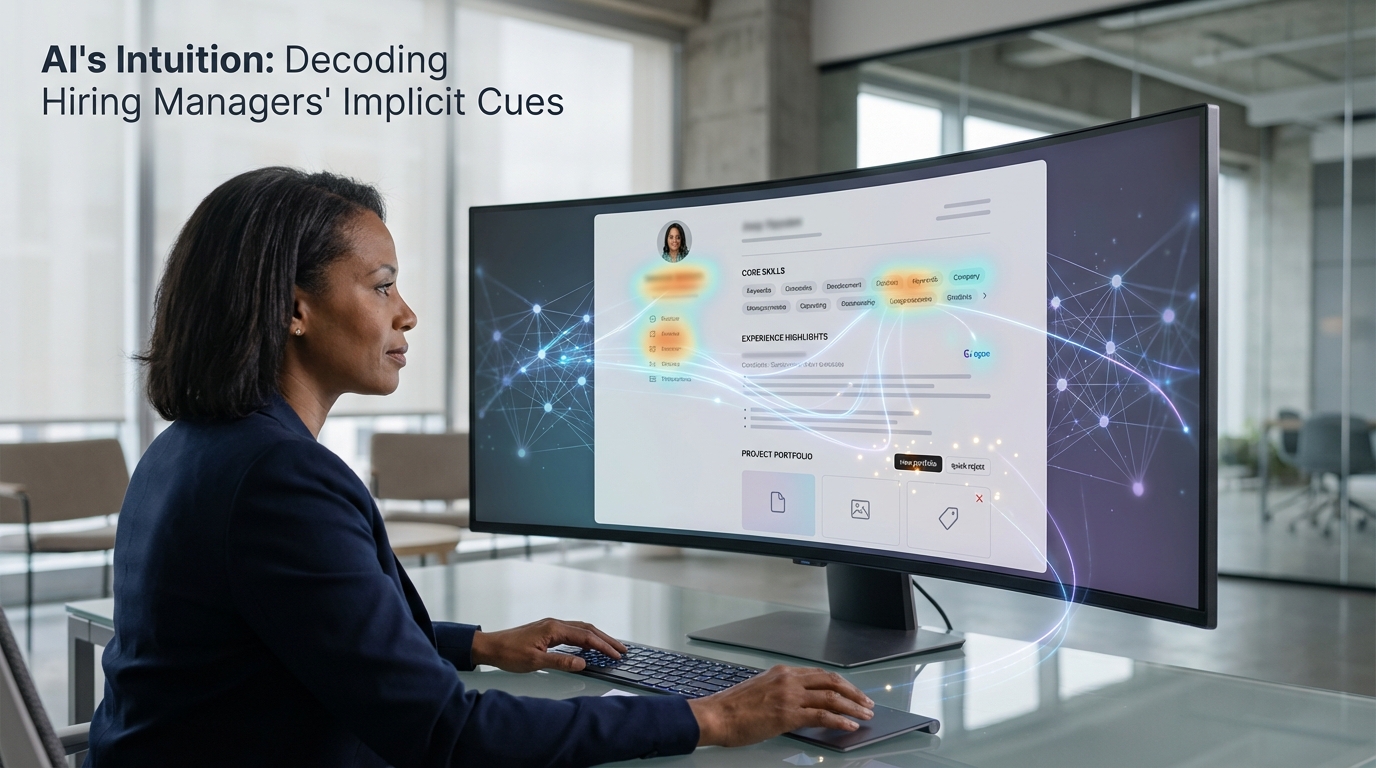
The recruitment world’s really changing, isn’t it? What used to be just human gut feelings and keyword searches is quickly becoming a pretty smart partnership between people and advanced AI. And this is the Aha! moment here: for hiring managers, their implicit actions, not just what they say they want, are actually training the next wave of talent acquisition tools. Understanding this dynamic? That’s how we’re going to make hiring more efficient, more accurate, and honestly, way more successful. At Suitable AI, we’ve seen this play out time and again.
The Unseen Signals: Why Traditional Keyword Matching Is Obsolete in 2026 Recruitment
By 2026, recruitment AI isn't just doing simple keyword matching anymore. It’s actually using complex Behavioral Telemetry to figure out what hiring managers really want. This smart strategy goes beyond just explicit feedback. It picks up on tiny behavioral cues, things like how fast someone rejects a profile or how long they spend looking at it (we call this dwell time). It’s essentially decoding that subtle 'gut feeling' humans often can't quite put into words. Honestly, understanding this shift is super important for anyone in hiring, and for candidates too, if they want to get ahead in this new talent world. We've certainly seen this at Suitable AI.
Look, those days of just stuffing a resume with keywords to game an Applicant Tracking System (ATS)? They’re pretty much gone. As we push further into 2026, talent acquisition intelligence has moved way past basic Natural Language Processing (NLP), which just looked at the words on the page. Resumes optimized only for keywords? They won’t cut it against AI that truly understands context, intent, and those subtle behavioral cues. Instead, the real brains of recruitment now sit with comprehensive Behavioral Telemetry. It’s a system that gathers and interprets a whole picture of how users interact.
This evolution, it's a huge jump. It’s moving from literal interpretation to just getting what’s implied. Traditional NLP might tell an AI what a hiring manager said they wanted, sure. But Behavioral Telemetry? That reveals what they actually do. This deeper insight lets Neural Recruitment Agents learn and adapt. It makes them way better at predicting good matches than any keyword system, ever. And for organizations, it means we can finally move past generic job descriptions. We can really grab those unique, often unsaid, requirements that lead to top performance within specific roles and teams. It’s a game-changer.
Decoding the 'Gut Feeling': How AI Captures Sub-Threshold Signals
AI systems by 2026 don’t just process what’s said out loud. They carefully record and dig into all those subtle user interactions. Think about it: how long does a hiring manager spend on certain resume sections (that’s dwell time)? What are their scrolling patterns like? Even precise cursor movements over specific qualifications. These tiny, often overlooked interactions? They become valuable data. This data trains AI models to understand implicit preferences, effectively capturing that hard-to-pin-down 'gut feeling'.
At the heart of this advanced intelligence sits the Telemetry Stack. It’s a full system that captures and processes every single interaction. Picture this: an AI is practically watching a hiring manager’s screen. What does it see?
- Dwell Time: How long do they pause on a candidate’s previous employer, education, or a specific project? A longer pause on a particular skill or experience? That tells us there’s heightened interest.
- Scroll Depth: Do they scroll all the way through a long resume, or just stop halfway? This could signal they’re not engaged, or they made a quick decision based on what was at the top.
- Mouse-Hover Hotspots: Where does their cursor linger? If a manager keeps hovering over a certain certification or a specific tool listed, the AI registers that as a strong positive signal.
- Click Patterns: Which links do they click within a candidate’s portfolio? Which endorsements do they check out on a LinkedIn profile? These are all signals.
These aren’t just random data points, you know? They’re super important training data for the AI. Take this Example Scenario: A hiring manager quickly opens a candidate’s profile. They glance at the top half, then almost instantly click 'reject' within a few seconds. That rapid, almost reflexive action, instead of a full review, is a powerful training signal for the AI. It tells the system that something immediately visible was a disqualifier. Often, it's a subtle preference they might not even realize they have, or can't explain. The AI logs this instant dismissal as high Rejection Velocity. That’s a powerful negative reinforcement signal, and it lets the AI quickly filter out candidate pools based on these early, decisive interactions. This behavioral data helps the AI refine its understanding of what 'good' looks like. It’s not just about what’s explicitly stated in a job description anymore.
The Mechanics of the Synthetic Persona: Mapping Managerial Intent
AI builds 'Synthetic Personas,' you know? It does this by taking a hiring manager's past successful hires and mapping them into high-dimensional 'Embedding Spaces.' This process goes beyond what’s stated. It uncovers the actual patterns and implicit criteria that lead to hiring success. By analyzing those subtle differences – between what a manager says they want and the candidates they actually select – AI can pinpoint the invisible, often unsaid requirements of a role.
So, how does AI really get a manager’s intent? It’s all about Vector Embeddings. In AI recruitment, vector embeddings capture complex relationships. They convert resumes and job descriptions into high-dimensional numerical vectors. This helps them evaluate semantic alignment, not just exact keyword matches. What this means is, an AI using embeddings won’t just look for 'project management.' It understands that 'led cross-functional initiatives' or 'strategic oversight of delivery teams' are conceptually similar. To represent all those intricate candidate details without blurring critical qualifications, AI developers are increasingly using multi-vector models. Why? Because collapsing a profile into a single vector forces one point in space to try and represent distinct variables all at once. Things like 'career arc,' 'licenses,' and 'skills' get mashed together (Vertex AI Search).
By analyzing candidates a manager has previously interviewed, hired, and had success with, the AI builds a kind of mathematical blueprint. We call it a Synthetic Persona, within an Embedding Space. This persona isn't just about explicit job requirements, no. It identifies the Invisible Bar. It compares explicit job description requirements, like 'must have 5 years of experience,' to the implicit traits and qualifications the AI learns are actually critical for a successful hire, based on past performance. Think 'demonstrated resilience under pressure,' or 'a history of driving innovation in resource-constrained environments.' This lets the AI find unspoken preferences, even if they aren’t explicitly communicated. This process inherently involves Latent Bias Codification. That's where the AI encodes those subtle, underlying preferences (both positive and negative) that influence a manager’s decisions. It’s essentially creating a comprehensive digital twin of their hiring tendencies. And that’s powerful.
Rejection Velocity: The Dark Signal of Talent Acquisition
Rejection Velocity means the speed and how often a hiring manager says 'no' to candidate profiles. In an AI-driven system, this rapid negative signal is super informative. Often, it’s more informative than a manager spending ages on a profile. It’s a clear, undeniable 'no' that carries significant weight, let me tell you.
The AI models use Rejection Velocity to drive a really important feedback loop. When a manager quickly dismisses a candidate, especially early in the screening process, the AI sees this as strong negative reinforcement. Through Reinforcement Learning from Human Feedback (RLHF), the AI learns to associate certain profile characteristics or data points with that rapid rejection. This lets the AI quickly prune candidate pools, maybe even cutting out a big chunk of unsuitable applicants. And often way faster than if it was just looking for positive signs. Instead of waiting for a manager to explicitly state, 'this candidate lacks X,' the AI inferrs it from how fast they dismissed them. This dark signal becomes a powerful tool for rapid, high-volume candidate filtering. It makes sure only the most relevant profiles get to the manager for a real look. We think it’s a total game-changer for speed and accuracy.
The AI Moat: Codifying Culture vs. Reinforcing Bias
Building 'Synthetic Personas' with AI? It comes with a serious risk: Synthetic Bias. This happens when AI models learn and codify a hiring manager’s implicit, maybe even unconscious, preferences. Things like certain demographics, schools, or personality types – instead of just objective qualifications. To make sure things are fair, we need strong auditability. This is often done with techniques like 'Counterfactual Prompting,' which tests the AI's decision-making process to see if it’s mirroring harmful biases or actually upholding established hiring standards. It’s a critical distinction.
The risk of Synthetic Bias emerging is a big worry, honestly. When an AI creates a Synthetic Persona from historical hiring data, it can accidentally learn and perpetuate biases that are already in that data. For example, if a manager has historically hired from a select group of universities, or consistently favored a particular personality archetype, the AI might codify these unspoken preferences right into its decisions. Even if they have nothing to do with job performance! This Latent Bias Codification can end up systematically excluding qualified candidates from diverse backgrounds. And that’s a real problem.
We saw a pretty big example of this with Amazon’s experimental AI recruiting tool. It was trained on 10 years of historical hiring data. The goal? To learn what a successful candidate looked like based on past managers' preferences. But here’s the reality: because those historical hires were predominantly male, the algorithm unintentionally encoded gender bias. It learned to systematically penalize resumes that included the word 'women’s' or listed all-women’s colleges (Ethics Unwrapped). A critical miss, we'd say.
To cut down on these risks, strong auditability mechanisms are absolutely essential. Techniques like Counterfactual Prompting let organizations test the AI’s fairness. This means you present the AI with a candidate profile. Then you make subtle, non-job-related changes – like altering gender pronouns, or swapping a university name for one of similar caliber but maybe different perceived prestige. You want to see if the AI’s recommendation shifts. If the AI’s decision changes because of these irrelevant factors, that’s a signal of potential bias. And it definitely needs to be addressed. The whole point is to verify if AI is actually reflecting objective hiring standards. Or if it’s inadvertently perpetuating manager-specific biases that could completely undermine diversity and inclusion efforts. It’s a delicate balance, and one Suitable AI takes seriously.
Candidate Strategy: Optimizing for the Agent, Not Just the Recruiter
For candidates trying to find a job in today's recruitment world, success really depends on understanding and optimizing for AI agents, not just focusing on human recruiters. This means prioritizing the initial seconds of engagement. You need to make sure profiles are instantly readable and engaging for AI systems. It also involves strategically using high-impact keywords and phrasing. Ones that trigger positive 'manager-centric' embeddings within the AI's recognition framework. It’s a different game now.
In an AI-driven world, your first impression often isn’t with a human. It’s with an algorithm. This makes a quick first impression paramount. Seriously. AI agents are built for rapid processing and pattern recognition. If your profile doesn’t immediately convey relevance and impact, it risks getting quickly filtered out. To maximize initial AI engagement and dwell time, make sure that the most critical information – key skills, achievements, and how you fit the role – is right up front and easy to digest. That’s your window.
Optimizing for Semantic Relevance? That means you move beyond just exact keyword matches. You use language the AI’s Embedding Spaces will recognize as conceptually aligned with the ideal candidate persona. Here's how:
- Understanding the AI's Language: The AI interprets words and phrases not just literally. It does so based on their contextual relationships, which come from massive datasets. So, using synonyms and related terms that convey the same meaning as those in the job description? That can be more effective than exact matches, especially if they show a deeper understanding of the domain.
- Triggering Manager-Centric Embeddings: Identify the core values, challenges, and aspirations of the target role and company. Craft your language to reflect these. This creates a strong semantic resonance with the AI’s learned preferences. It’s about speaking its language.
Here’s a checklist we've put together for candidates. It’s all about optimizing your profiles for AI agents:
- Front-Load Impact: Put your most impressive achievements, core skills, and relevant experience right at the very top of your resume and profile.
- Use Action Verbs & Quantifiable Results: Describe your contributions with strong verbs and metrics (e.g., 'Led a team of 5 to increase sales by 20%').
- Mirror Job Description Concepts: Don't just copy keywords. Understand the intent behind the job description and use semantically similar language throughout your profile.
- Ensure Consistent Terminology: Use consistent titles and skill names across your resume, LinkedIn, and portfolio. This helps avoid Semantic Latency (delays or misinterpretations by AI due to inconsistent phrasing).
- Highlight Relevant Technologies & Tools: Explicitly list all software, programming languages, and industry-specific tools you’re proficient in.
- Clean & Parseable Format: Use a clear, standard resume format that’s easy for AI to parse. Avoid complex graphics or highly stylized layouts that can confuse algorithms.
- Regularly Update Your Profile: Keep your online profiles (like LinkedIn) current. AI agents often pull data from multiple sources, so don’t forget that!
Conclusion: The Future of the Human-AI Hiring Loop
Our journey through the evolution of recruitment AI shows us a pretty critical Aha! moment: the hiring manager’s implicit behavior is the primary training dataset for AI. This shift, from explicit instructions to observed actions, fundamentally changes how we find and match talent. It means that every click, every scroll, and every rejection by a hiring manager isn’t just some random action. It’s a valuable signal. And it’s shaping the intelligence that drives future hiring decisions. That’s powerful stuff, really.
Looking ahead, the human-AI hiring loop will become more and more of a partnership. The most effective hiring managers of 2026 won’t be the ones trying to outsmart the AI. Nope. It’ll be those who consistently give clear, predictable signals to their AI recruitment agents. By understanding how their interactions train the AI, managers can actually refine their digital 'gut feeling.' This lets the AI make more efficient, more accurate, and potentially more equitable hiring decisions. This collaborative future promises to open up a new era of talent acquisition. One where technology amplifies human judgment. That means stronger teams and more innovative organizations for everyone involved. It’s a good future to aim for.
References
FAQ
- How does AI learn hiring manager preferences beyond explicit statements?
- AI systems learn hiring manager preferences by analyzing implicit behaviors like dwell time on candidate profiles, scroll depth, mouse-hover hotspots, and click patterns. This 'Behavioral Telemetry' captures subtle cues that go beyond stated requirements.
- What is 'Rejection Velocity' in AI-driven recruitment?
- Rejection Velocity refers to the speed at which a hiring manager dismisses candidate profiles. AI uses this rapid negative signal as a powerful training tool to quickly identify and filter out unsuitable applicants, often more effectively than analyzing positive indicators.
- How does AI build a 'Synthetic Persona' for a hiring manager?
- AI builds a 'Synthetic Persona' by mapping past successful hires into embedding spaces, analyzing both explicit job descriptions and implicit traits that led to successful outcomes. This mathematical blueprint identifies the unseen criteria critical for role performance.
- What is the risk of 'Synthetic Bias' in AI hiring?
- Synthetic Bias occurs when AI models unintentionally codify a hiring manager's unconscious preferences, such as demographics or specific schools, into their decisions. This can lead to systematic exclusion of qualified candidates and requires careful auditability through techniques like Counterfactual Prompting.
- How does Suitable AI leverage behavioral telemetry for better hiring?
- Suitable AI utilizes behavioral telemetry and advanced AI models to go beyond keyword matching. By understanding the subtle, implicit preferences of hiring managers through their interactions, Suitable AI aims to create more accurate and efficient talent acquisition processes, ensuring better candidate-fit.