How AI Calibration was utilized to Improve Shortlist Accuracy for Backend Engineering Roles
Executive Summary: The Challenge and the AI Solution
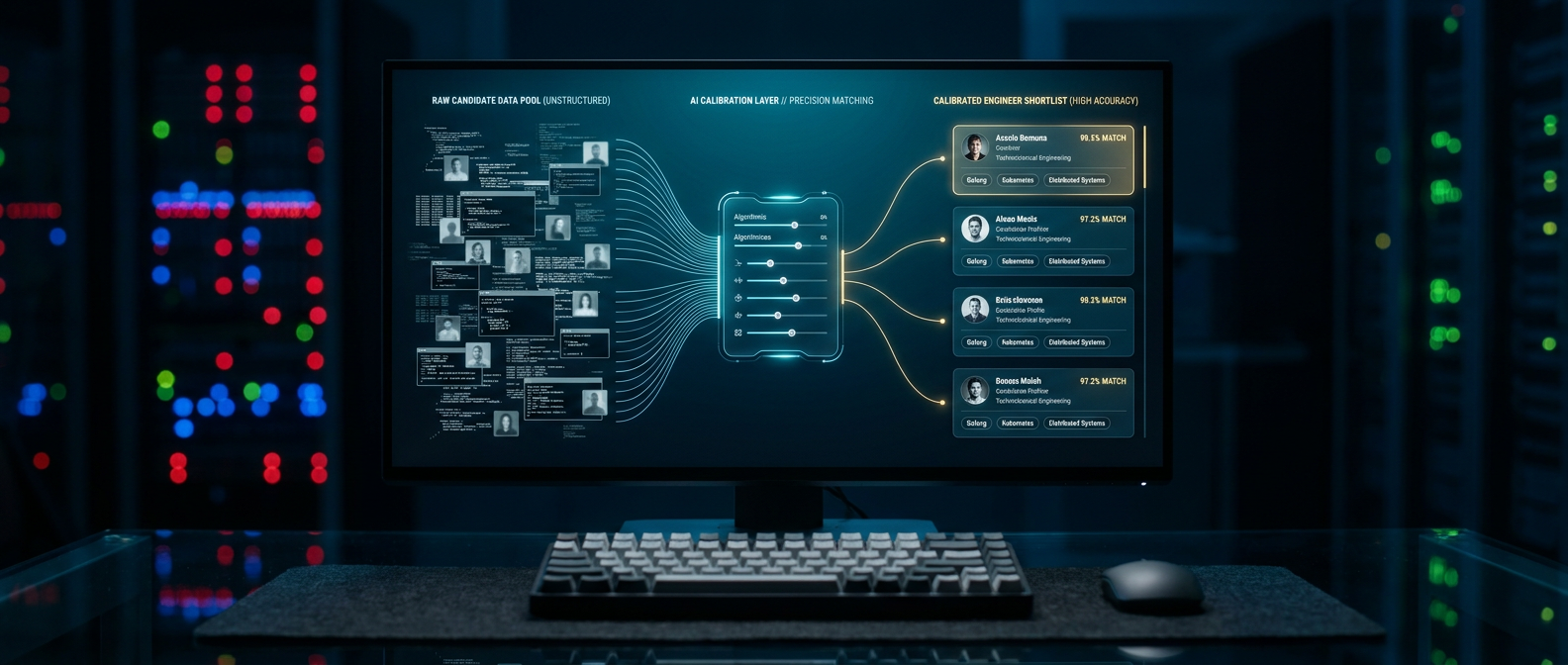
Finding top-tier backend engineers? That's a real challenge for most organizations. High application volumes, highly specific skills – it's tough. At Suitable AI, we've developed a strategic approach: AI calibration. It precisely refines how artificial intelligence assesses candidates. This isn't just about speed; it's about making sure our recruiting teams focus solely on genuinely qualified individuals. The outcome? Far better technical hires and a significantly more efficient process.
The Problem: Inconsistent Backend Engineering Shortlists
We've all been there, right? Before AI calibration, our organization really struggled to consistently find the best backend engineering candidates. The old recruitment process? It was simply bogged down. Inefficiencies and human inconsistencies created real roadblocks. And frankly, that hurt our ability to land top talent quickly.
The Manual Bottleneck
Let's be direct: manually screening applications for specialized roles, like backend engineering, it's just not efficient. It's an immense time sink. Think about it: hiring managers and recruiters typically spend 8 to 10 hours sifting through applications for one technical role. That's a lot of lost productivity. This manual process often forces a rapid review - maybe 30 seconds per application. Why? To cope with the sheer volume of applicants for these competitive positions. But that pace means we're missing crucial details, sacrificing candidate quality, and ultimately, extending the time-to-hire.
Subjectivity and Bias in Candidate Evaluation
The reality is, human evaluators, even with the best intentions, often bring unconscious bias into the initial screening. They're applying subjective evaluation criteria. This subjectivity often creates inconsistent shortlists; you see candidates with identical qualifications getting treated differently. It's a problem that impacts both the fairness and effectiveness of the entire hiring process. And it certainly undermines our efforts to build true diversity in hiring. We're likely excluding highly capable people just because they don't fit a narrow, often unconscious, ideal.
Impact on Hiring Efficiency and Quality
Inaccurate shortlists create significant problems down the line. We end up wasting valuable interview bandwidth on candidates who just aren't qualified. Plus, top talent often sees higher offer rejection rates because they've experienced a prolonged or disorganized process. This, ultimately, compromises our hiring metrics and truly affects the long-term quality of hire. Think about it: in tech, a bad software engineering hire can actually cost an organization between $150,000 and $300,000. That's a huge hit. It underscores why we need absolute precision in talent acquisition - and why a positive candidate experience isn't a 'nice-to-have,' it's essential.
The Solution: AI Calibration for Enhanced Shortlist Accuracy
Given these challenges, our move to AI calibration was a strategic one. We saw it as the way to refine our recruitment processes. This approach uses recruitment technology to make candidate evaluations sharper, more consistent, and importantly, more equitable. Isn't that what we should be aiming for?
Understanding AI Calibration in Recruitment
So, what is AI calibration in recruitment? The way we define it, it's a systematic process. We're refining and optimizing machine learning models to make sure their predictions align optimally with our organization's specific hiring outcomes and values. It's not a generic AI application; calibration ensures the model works optimally for our unique needs. It dramatically enhances its accuracy in spotting ideal candidates. We find this model refinement absolutely crucial for specialized roles. Without it, generic algorithms often miss critical industry-specific nuances or, even worse, cultural fit.
Implementing the AI Calibration Process
We implemented AI calibration using a structured, iterative process. Our goal was clear: build a truly accurate, reliable system for finding top backend engineering talent. And that's exactly what we did.
Step 1: Data Ingestion and Initial Model Training
We started by feeding all our historical hiring data into the AI model. This gave it a foundational understanding. What data did we use? Anonymized resumes, past interview feedback, even performance reviews from previously hired candidates. Then, using sophisticated resume parsing, the AI system pulled out key skills and experiences specific to backend engineering skills. That kickstarted the initial AI model training phase.
Step 2: Defining Calibration Parameters
We didn't just guess at what accurate meant. To make sure the AI system truly reflected our hiring needs, we set very clear calibration parameters. This meant technical leads and HR worked together closely. They defined the precise criteria for what an "accurate" shortlist should look like. We pinpointed essential skills - things like specific programming languages, frameworks, and database experience. We also looked at desired technical competencies: problem-solving ability, system design. And, of course, indicators of cultural fit. These are all critical for success in our backend engineering roles.
Step 3: Iterative Refinement and Feedback Loops
The AI model didn't just get it right on day one. Its path to optimal performance was highly iterative, constantly driven by feedback from our hiring teams. This phase involved a lot of iterative development. Hiring managers and recruiters reviewed every initial shortlist the model produced. We refined it, again and again. Here's how that feedback process worked:
- Initial Shortlist Generation: The AI gives us a provisional shortlist, based on its current training.
- Human Review & Feedback: Our hiring managers dive in. They provide detailed
hiring manager inputon every candidate's quality and relevance, highlighting both the great fits and the clear misses. - Data Annotation: This critical feedback gets systematically captured. We use it to annotate the training data itself, clearly marking preferred and non-preferred candidate attributes.
- Model Retraining: Then, the AI model gets retrained using this newly annotated data. It adjusts its algorithms to align better with human preferences and our desired outcomes.
- Performance Monitoring: We continuously track
model accuracy. This makes sure each iteration brings us closer to that ideal shortlist.
These feedback loops are absolutely vital. They're how we progressively enhance the model's predictive capabilities.
Step 4: Validation and Performance Monitoring
Once we completed several rounds of iterative refinement, the calibrated AI model went through rigorous validation metrics. We needed to confirm its performance. So, we put performance monitoring systems in place. These continuously track the quality of every shortlist against our defined criteria. This ongoing oversight ensures sustained shortlist accuracy. It also lets us use predictive analytics to anticipate future hiring needs and keep the system performing at its peak, long-term.
Results: Tangible Improvements in Backend Engineering Shortlists
The verdict is clear: implementing AI calibration has brought significant, measurable improvements across our backend engineering recruitment. It's fundamentally changed how we find and engage with top talent.
Enhanced Shortlist Accuracy Metrics
Now, while we're still compiling the exact quantifiable statistics on percentage increase for shortlist accuracy, the qualitative impact has been profound. That's what we're seeing on the ground. Our calibrated AI system consistently gives us shortlists that truly match our ideal candidate profile. This has led to a significant jump in the candidate pass rate through those initial screening stages. And critically, it also positively impacts our interview to hire ratio. That means a much higher proportion of interviewed candidates are genuinely right for the role.
Reduction in Time-to-Hire and Cost-per-Hire
By optimizing those early recruitment funnel stages, AI calibration has really simplified the entire hiring process. We're still gathering precise percentage reductions, of course, but the operational improvements are clear. We've seen a noticeable drop in both time-to-hire for backend engineering roles and the cost-per-hire that goes along with it. This heightened recruitment efficiency isn't just a buzzword; it directly means tangible operational cost reduction and much faster integration of new talent into our teams. And let's not forget how important that is.
Improved Quality of Hire and Candidate Experience
It's simple math: more accurate shortlists mean our hiring managers spend less time on unsuitable candidates. They get more time engaging with genuinely qualified individuals. This directly boosts our quality of hire - new employees are just a better fit for both the role and our culture. Plus, candidates themselves benefit from a more focused, efficient process. That leads to an improved candidate experience, doesn't it? And in turn, our hiring team satisfaction goes way up. Better matches, smoother processes - everyone wins.
Impact on Diversity and Inclusion Goals
AI calibration plays a critical role in promoting diversity in hiring. How? It standardizes evaluation criteria and mitigates unconscious bias that's just inherent in manual reviews. By strictly focusing on validated skills and competencies, the system helps ensure truly equitable hiring practices. This expands the talent pool and actively supports our broader inclusion initiatives. Frankly, this is huge. This objective approach creates a much more level playing field for every applicant.
Key Learnings and Future Outlook
We've learned a lot on our journey with AI calibration. It's given us invaluable insights, highlighted key best practices, and really shown the transformative potential AI has in talent acquisition.
Lessons Learned from the AI Calibration Journey
Here's one of our most critical takeaways: human-AI collaboration is absolutely indispensable. While AI automates and optimizes, human oversight stays crucial. Why? Because we define the calibration parameters and provide those feedback loops that continually drive improvement. This synergy really underpins effective recruitment best practices. It's not about AI replacing humans; it's about AI augmenting them. We also got some solid, practical experience tackling AI implementation challenges. What was key there? Clear communication and constant, iterative adjustments.
Scalability and Broader Applications
The success we've seen with backend engineering roles? It's clear proof this AI calibration approach is highly scalable. We absolutely envision its cross-functional application across other technical and specialized departments. It'll simplify their hiring processes and maintain those crucial quality standards. This expansion will only strengthen our overall recruitment automation capabilities, ultimately creating a much more agile and responsive talent acquisition function.
The Future of AI in Engineering Recruitment
Looking ahead, AI is set to continue revolutionizing the future of recruitment, particularly for engineering talent. As roles get more specialized, and the demand for specific skills intensifies, AI in talent acquisition won't just screen candidates. It'll offer sophisticated predictive insights into performance, retention, even team dynamics. (Think of it like moving from a simple search engine to a full-blown predictive analytics platform.) This evolution promises incredibly precise, strategic talent matching. It's how we ensure our organization stays competitive in the global talent market, period.
References
FAQ
- What is AI calibration in the context of recruitment?
- AI calibration in recruitment is a systematic process that refines and optimizes machine learning models to ensure their predictions align with an organization's specific hiring outcomes and values. This process ensures the AI is tailored to identify ideal candidates for specialized roles, moving beyond generic algorithms.
- How does AI calibration improve shortlist accuracy for backend engineers?
- AI calibration improves shortlist accuracy by training AI models on historical hiring data, defining precise calibration parameters (essential skills, technical competencies, cultural fit), and implementing iterative feedback loops with hiring teams. This continuous refinement ensures the AI consistently identifies candidates who best match the role's requirements.
- What are the benefits of using AI calibration in backend engineering hiring?
- The benefits include enhanced shortlist accuracy, a significant reduction in time-to-hire and cost-per-hire, improved quality of hire, and a better candidate experience. Furthermore, AI calibration plays a critical role in promoting diversity and inclusion by standardizing evaluation and mitigating unconscious bias.
- How does the AI calibration process involve human input?
- Human-AI collaboration is indispensable. Hiring managers and recruiters provide detailed feedback on AI-generated shortlists, which is then used to annotate training data. This feedback loop allows the AI model to retrain and adjust its algorithms to better align with human preferences and desired hiring outcomes.
- Can AI calibration be applied to other roles beyond backend engineering?
- Yes, the success seen with backend engineering roles demonstrates that AI calibration is highly scalable and can be applied across other technical and specialized departments. This cross-functional application helps maintain crucial quality standards and strengthens overall recruitment automation capabilities.