Improving Embedded Systems Hiring Accuracy with Structured AI Screening
The Real Cost of Bad Hiring in Embedded Systems
Hiring for embedded systems roles isn't just about finding engineers. It’s about pinpointing a very specific mix of hardware savvy, deep software development skills, and the kind of problem-solving acumen crucial for complex, often safety-critical applications. When your hiring accuracy falters in this specialized domain, the repercussions can cascade, hitting your organization hard. We've seen it time and again: project deadlines slip, development costs escalate, and overall product quality takes a hit.
The unique demands of embedded systems – everything from real-time operating systems to intricate hardware-software interactions – frankly, require a hiring process that genuinely identifies top talent. Without it, you’re not just looking at an unfilled position. You’re facing an entire ecosystem of negative impacts on your embedded systems projects, which inevitably leads to significant project delays, increased development costs, and compromised product quality. Ultimately, this erodes market competitiveness and customer satisfaction.
Spotting the Gaps in How We Typically Screen Candidates
Many companies still rely on traditional screening methods that simply aren't equipped to assess the nuanced expertise embedded systems demand. Resume reviews, while foundational, often can’t differentiate between surface-level knowledge and deep, practical experience. We’re talking about areas like C/C++ programming for microcontrollers or truly understanding real-time constraints. And generic interviews? They frequently fail to probe beyond theoretical concepts, leaving critical gaps in technical skills assessment.
Beyond technical prowess, the ability to collaborate effectively, communicate complex ideas, and troubleshoot under pressure – what we often call soft skills evaluation – is absolutely vital. Conventional approaches frequently overlook these critical attributes. Yet, they are paramount for successful integration into highly specialized engineering teams. This oversight leads to mis-hires who, despite their technical qualifications, might struggle with the collaborative, iterative nature of embedded development. It’s a missed opportunity, really.
The High Stakes of the Embedded Systems Talent Shortage
The embedded systems industry is currently grappling with an acute talent shortage, making accurate and efficient hiring more critical than ever. Consider this: 80% of embedded engineering job postings currently remain unfilled for months due to a severe lack of candidates. Companies are in a fierce battle for specialized skills across all engineering roles RuntimeRec. This scarcity means a prolonged hiring process, or making the wrong choice, doesn't just waste resources. It surrenders a competitive edge.
The demand for embedded software engineers in the U.S. alone, for instance, is projected to increase by 29.2% between 2023 and 2033, adding approximately 487,213 new jobs. In this environment, your ability to quickly and accurately identify, attract, and onboard top embedded talent directly influences your capacity for innovation and market leadership. Failing to adapt your hiring strategy means potentially losing crucial talent to competitors who are embracing more advanced, precise methods.
The Solution: Structured AI Screening for Embedded Systems
Structured AI screening employs advanced algorithms to objectively assess candidates' technical proficiency, problem-solving skills, and even cultural fit. This demonstrably leads to more accurate hiring decisions in embedded systems. This approach provides a systematic, data-driven way to evaluate aspiring embedded systems engineers. It makes sure those hired possess the specific blend of capabilities needed to excel in complex development environments. By moving beyond subjective traditional methods, AI screening enhances the precision and fairness of your recruitment process.
Introducing an AI-Powered Embedded Hiring Framework truly transforms how organizations identify and secure talent for these highly specialized roles. It moves past simple keyword matching to genuinely understand a candidate's potential and suitability. This AI screening framework applies rigorous, consistent criteria across all applicants, mitigating human bias. It makes sure every candidate receives an equitable evaluation based purely on their merits and how well they align with the role's requirements.
Key Components of Our AI Screening Process
Structured AI screening for embedded systems involves several interconnected components. They’re designed to give us a holistic view of each candidate.
1. Objective Technical Assessment
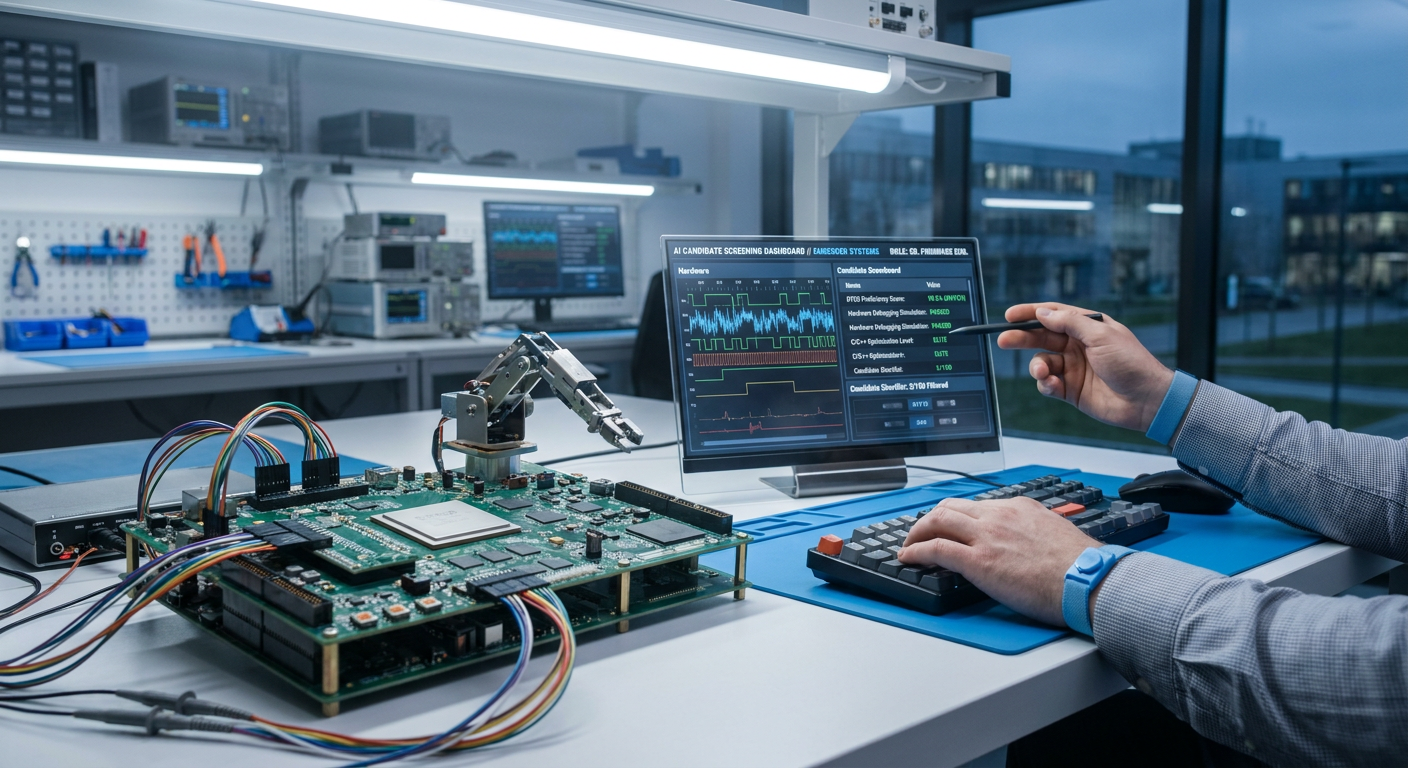
AI-powered technical assessment tools are revolutionizing how companies evaluate the core competencies of embedded systems engineers. These tools can administer and automatically score sophisticated coding challenges tailored for embedded development environments. They test proficiency in languages like C/C++ and understanding of real-time operating systems (RTOS) or microcontroller programming. Beyond static code, advanced platforms can simulate complex hardware interactions. This provides a realistic hardware simulation environment where candidates debug and optimize code. It directly demonstrates their ability to work within the unique constraints of embedded systems. This objective evaluation makes sure technical skills are thoroughly vetted before candidates even reach later interview stages.
2. Behavioral and Soft Skills Analysis
While technical skills are non-negotiable, the ability to collaborate and innovate is equally vital. AI can analyze responses to behavioral interviews and open-ended questions, looking for indicators of crucial soft skills. It assesses communication clarity, problem-solving approaches, and adaptability. This deep analysis helps us gauge a candidate's communication skills, capacity for teamwork, and critical thinking abilities. It provides insights into their potential cultural alignment and how they might contribute to team dynamics. This makes sure you're not just hiring skilled individuals, but effective team members.
3. Predictive Performance Metrics
The true power of AI in hiring lies in its capacity for predictive analytics. By combining insights from both objective technical assessments and behavioral analyses, AI generates a comprehensive candidate scoring. This goes beyond immediate qualifications. It uses data to predict a candidate's potential for long-term success and longevity within an embedded systems role. This means identifying patterns in successful hires and then using those to project future hiring outcomes. It improves overall recruitment effectiveness and reduces the risk of costly mis-hires.
Looking Ahead: The Evolution of AI in Embedded Systems Talent Acquisition
The application of AI in hiring for embedded systems isn't just a fleeting trend. It’s a fundamental shift in how organizations build their engineering teams. As technology advances, its role will only deepen and broaden.
Beyond Screening: AI in the Full Talent Lifecycle
The current focus on AI in recruitment primarily centers on screening. But its potential extends throughout the entire talent lifecycle. Imagine AI assisting in proactive sourcing of niche embedded expertise, predicting skill gaps for future projects, or even personalizing learning paths during onboarding and continuous development. This holistic view of talent management means AI can become an indispensable partner in strategic workforce planning, making sure your organization is always prepared for the next wave of innovation in embedded systems.
Addressing Ethical Considerations and Mitigating Bias
As with any powerful technology, implementing AI in hiring requires careful consideration of its ethical implications. While AI can significantly reduce human bias, it’s crucial to acknowledge and actively work to prevent AI bias within its algorithms. This involves rigorous testing, diverse training data, and continuous monitoring to ensure fairness in hiring practices. At Suitable AI, we’re committed to developing ethical AI solutions that promote equitable opportunities and uphold the highest standards of transparency and accountability.
The Competitive Advantage of AI-Augmented Hiring
Ultimately, embracing AI-augmented hiring for embedded systems professionals is about securing a profound competitive advantage. In a market characterized by intense competition for specialized talent, organizations that use AI to identify, attract, and retain top engineers will be better positioned to innovate, accelerate product development, and capture market share. This strategic approach to talent acquisition strategy isn't just about efficiency. It's about safeguarding your capacity for innovation and ensuring long-term business success.
References
FAQ
- What is structured AI screening for embedded systems hiring?
- Structured AI screening employs advanced algorithms to objectively assess candidates' technical proficiency, problem-solving skills, and soft skills. This data-driven approach ensures consistent evaluation, moving beyond subjective traditional methods for more accurate embedded systems hires.
- Why is hiring accuracy so crucial for embedded systems roles?
- In embedded systems, inaccurate hires lead to significant project delays, increased development costs, and compromised product quality. The specialized nature of these roles, coupled with a severe talent shortage where 80% of job postings remain unfilled for months, makes precision in hiring paramount for competitive advantage.
- How does AI objectively assess technical skills in embedded systems engineers?
- AI-powered technical assessment tools administer and score sophisticated coding challenges tailored for embedded development, testing proficiency in languages like C/C++ and RTOS concepts. They can also use hardware simulation environments to test debugging and optimization skills in realistic scenarios.
- Can AI help mitigate bias in embedded systems hiring?
- Yes, while AI itself requires careful development to prevent bias, structured AI screening can significantly reduce human bias by applying consistent, objective criteria to all candidates. This ensures fairness and equitable evaluation based on merit and role alignment.
- What are the long-term benefits of AI-augmented hiring for embedded systems?
- AI-augmented hiring provides a competitive advantage by enabling organizations to identify, attract, and retain top specialized talent more effectively. This leads to accelerated product development, increased innovation, and sustained market leadership in the fast-evolving embedded systems sector.